Below please find a link which contains my final MREM project report, which is titled Seafood Ecolabels: For Whom and to What Purpose.
https://sites.google.com/site/mremprojectreportkaitlanlay/
If there are any comments please send them my way!
Taking a look at the environmental footprints that we have left behind as well as the road ahead.
Seafood Ecolabels: For Whom and to What Purpose?
Genetically Modified Salmon in the News
This media analysis was written for my Sociopolitical Dimensions of Resource and Environmental Management class last semester.
Introduction:
Genetically modified foods (GM foods) first appeared on the market in the early 1990’s. As stated by the World Health Organization: “genetically modified organisms (GMOs) can be defined as organisms in which the genetic material (DNA) has been altered in a way that does not occur naturally… It allows selected individual genes to be transferred from one organism into another, also between non-related species” (2011). The first commercially grown GM food released for public consumption was the FlavrSavr tomato, which “tests showed… picked ripe from the vine, had an unusually long shelf life. After three or four weeks at room temperature they essentially looked and felt as if they had just been picked, whereas ordinary vine-ripened tomatoes were noticeably shrivelled and rotting” (Martineau, 2001). Since the introduction of GM crops many farmers have come to rely on biotech crops in place of conventional crops (ISAAA, 2009). According to the ISAAA, in 2009 “a record 14 million farmers, in 25 countries, planted 134 million hectars of biotech crops”(Slide 9). Developed countries have become heavily dependent on GM foods, with “more than half the crops grown in the U.S., including nearly all the soybeans and 70% of the corn, being genetically modified” (Hindo & Schneyer, 2007). It was not until recently that the issue of commercially grown GM animals began to appear in the news. The production of ‘Enviropigs’, ‘AquAdvantage’ salmon, GM goats that produce human breast milk and chickens who’s eggs contain proteins for cancer-fighting drugs (Belluz, 2010) has created a greater divide between critics and supporters of GM foods. Supporters suggest that GM animals will help alleviate the pressures of global food demand for our worlds’ ever growing population. While critics claim that the GM animals pose risks not only to the natural environment but also to human health. AquaBounty’s genetically modified Atlantic salmon has added DNA from Chinook salmon and ocean pout, which causes the fish to grow twice as fast as regular Atlantic salmon. The company claims that the GM salmon will be grown at inland facilities and that they are reproductively sterile (AquaBounty, 2011). The discussion surrounding AquaBounty’s AquAdvantage salmon is critical in the discussion of GM animals, as it has already gone through hearings regarding its approval for sale from the FDA and would have been the first GM animal to be approved for human consumption. This paper will explore the information that was provided to the public through newspapers and news clips, before, during, and after the hearings regarding the approval of GM Atlantic salmon.
Purpose:
The purpose of this media analysis is to explore the information that was provided to the general public through newspapers and news clips, surrounding the hearings regarding the approval of GM Atlantic salmon. The analysis was also used to identify the themes that appeared in the articles as well as the timing of those articles. The final objective of the analysis was to uncover any underlying messages that the media was inadvertently sending the public regarding the issue.
Major Findings:
Some of the major findings that were uncovered during the media analysis were that journalists writing stories on the issue of GM salmon heavily relied upon key informants to construct the articles. Many of these informants had very opposing view points, which in most cases required the journalists to include both sides of the story to create a ‘neutral’ viewpoint. Coverage of the issue was heightened during the two days of hearings, which included the FDA, AquaBounty, and critics. It was also found that there were a number of themes that were used consistently throughout the reporting, which assisted with the development of the stories as well as creating interest in the issue.
Methodology:
For the media analysis of Aquabounty’s GM salmon a list of search terms was first developed. As there are a variety of terms used in relation to the GM fish and its surrounding issues, a list of the five most common labels was created (Genetically Modified Salmon, GM Salmon, AquaBounty, AquaAdvantage, Frankenfish). These search terms were used to obtain appropriate articles from both national and international news sources. The articles were found through the use of search engines of electronic databases such as Lexis Nexis, Google News and Google. The search provided ten articles and two television news clips from news outlets such as CBC News, CTV, ABC News, The Ecologist, The Globe and Mail, The Toronto Star, Huffington Post, The Observer, Aljazeera, PBS and The Independent.
Topic Analysis
When the stories ran:
Hearings regarding the approval of sale of genetically modified salmon began on September 19th 2010 and concluded on September 20th 2010. AquaBounty, the FDA and critics presented their findings to an advisory committee on September 20th. The committee then advised the FDA on whether to approve the sale of the GM fish. There was some coverage of the GM salmon issue prior to the hearing, with most of these articles providing the general public with a broad overview of the issue as well as opinions from opposing parties. However, most coverage of the GM salmon issue occurred on the same day as the final day of hearings, September 20th, 2010. These articles focus on the inability of the panel to come to a final conclusion regarding the sale of GM salmon. The articles also attempt to portray the frustrations of both the advocates and critics of the GM salmon surrounding the decision. The articles that were released after the hearing focused more on the issue of the labelling of GM animals as well as the uncertainty of future decisions regarding the approval of the salmon.
Where the stories ran:
Most of the GM salmon articles that appeared in the papers would be classified as news pieces, as they were generally straightforward stories that reported on the latest events surrounding the issue. The collection of articles that was assembled for the media analysis represent a national and international interest in the issue as the selected media came from Canada, the U.S., and Europe. The stories that ran regarding GM salmon appeared in a variety of sections in the papers. Depending on the angle the journalist approached the story from, the articles were in sections such as: Health, Food, Green, Canada, PEI, News in Brief, and In Focus. The array of sections that the articles appeared in shows the complexity of the issue as it affects numerous aspects of the public’s everyday life. The Toronto Star article “Genetically modified salmon is ready for dinner” appeared in the ‘Food’ section. This article may cause the reader to focus on the issues regarding the consumption of the GM salmon and its possible effects on the human body. The Huffington Post article “Genetically modified salmon hearing begins” appeared in the ‘Green’ section, which could cause the reader to focus on issues surrounding the environmental implications that may occur if the GM salmon was approved for commercial sale.
Categories:
The categories that appeared in the GM salmon articles included: the global food crisis, human health risks, environmental risks, labelling of GM foods, and GM salmon opening the door for other commercial GM animals. The issue of the global food crisis frequently appeared in the articles with AquaBounty arguing that the GM salmon will help feed more people as the salmon could be farmed closer to population centers. This topic was usually followed with the argument that the GM salmon would also help alleviate pressures on wild salmon population. The topic of human health risks was argued from both sides, with critics claiming that there are too many health risks that could possibly be associated with GM salmon and supporters claiming that no health risks exist because the GM salmon is no different from regular salmon. Environmental risks was another topic that was argued from both sides, with the supporters claiming that the environmental risks would be minimal because AquaBounty has put safeguards in place (sterile fish and land base farming), while those who oppose GM salmon state that the possibility exists for some of the fish to be able to reproduce and escape into the wild. The issue of labelling was a large topic in many of the articles that appeared after the hearings. AquaBounty claims that it is unnecessary to label the GM salmon due to the fact that they are the ‘same’ as regular salmon; whereas critics claim that the public has a right to know if they are purchasing GM animals. The final category of GM salmon opening the door for other GM animals was a topic that was discussed consistently through the articles, as it is seen as a positive step for AquaBounty and similar companies, while for critics it is seen as a threat to consumer rights. Through the diversity of these topics reporters were able to focus on a variety of issues that surround GM salmon. However, many of these categories required the reporters to rely on specific sources, such as scientists, environmentalists, and the company itself, which can cause biased information to appear in the article that needs to be countered with information from alternative sources. This is why in many of the articles regarding GM salmon journalists include quotes and information from all sides: critics, advocates and government.
Framing Analysis:
Some of the frames that were used during the reporting of GM salmon were:
The big bad company: Many of the stories were framed with the idea that AquaBounty, the company responsible for the creation of GM salmon and who was pressing for FDA approval, was the big bad company who had come to change the way we produce our meat. In many of the articles critics accuse AquaBounty of withholding proprietary information concerning the GM salmon. The company also takes the fall for trying to open the doors for approval of other GM animals, such as pigs and goats. This frame is an easy one to apply to the issue of GM animals, as a large portion of the public have already formed opinions on GMOs in the wake of companies such as Monsanto. In using this frame, reporters create an image of the large corporation who is only concerned with money, power, and having no regard for the environment or human health.
Eco-warriors: The inclusion of the environmental activist was an important frame for many of the articles. In the stories that used this frame, there was a sense that the small consumer and environmental groups were battling against the company and the government to assert the rights of the general public. This frame carries positive associations of a fighter, the search for truth, and looking out for one another.
GM foods are evil: Negative connotations have surrounded GM foods since they were first discussed. The unnaturalness of GM foods in some cases is presented as evil and that they do more harm than good. This frame is used in the articles in which the critics of GM salmon are a main focus, as it pushes the idea that these altered animals are not fit for human consumption.
Government/ FDA decision making: Many of these stories were framed with the idea that both the American and Canadian Governments were inadequately addressing the issues and concerns of the critics and general public concerning GM salmon. Before the hearings had begun and without all of the information and evidence the FDA made the statement that ‘GM salmon are safe to eat’, which indicates that the FDA was trying to assure Americans that it was unnecessary to be concerned about eating GM salmon. However, the statement may have done the exact opposite, causing more people to question how the FDA could make such a statement without the proper information. In using this frame reporters present the idea that the government is on the side of the company and that it is an uphill battle for those concerned with the approval of GM animals.
Spokesperson Analysis:
In many of the articles covering GM salmon, quotes were used to argue both sides of the issue, critics and supporters of the approval. In the analysis of the articles it was found that critics of the approval were quoted most often and that there was a larger pool of spokespeople discussing the possible negative impacts the GM salmon may introduce. The critic’s quotes were taken from an array of nonprofit organizations, each of which have varying missions but take the same position when discussing GM animals. Wenonah Hauter, the Executive Director of Food and Water Watch, was quoted in a number of articles in which she focused on consumer rights and the food supply. Most of the quotes from GM salmon critics focused on the uncertainty that surrounds GM salmon in terms of human health, environmental risks, as well as the lack of data. The critics have also come up with the catchy name ‘Frankenfish’ to refer to GM salmon, which has become a favourite reference to GM salmon for journalists.
Ron Stotish, the Chief Executive Officer at AquaBounty was quoted in almost all of the articles. Stotish’s quotes have a very convincing tone, but in the end many of the comments come off as unbelievable, for example: “This fish is identical to the traditional food”. He consistently used the terms ‘conventional’ and ‘traditional’, to refer to regular Atlantic salmon, which creates the divide between GM salmon and regular salmon, which AquaBounty was trying so hard to eliminate.
The quotes from both critics and the advocates of GM salmon contained charged language that was sure to grab the attention of the readers and made it easy for the journalists to set the tone for the article. Quotes from the critics often contained negative fearful language such as: dangerous, uncertain, unpredictable, irreversible consequences, outrageous, slippery slope and flimsy science. Whereas the quotes from the advocates contained positive, enthusiastic language such as: sky’s the limit, solution, identical, reducing environmental footprint and mitigating the impending global food shortage.
The FDA’s statement of GM salmon being “as safe to eat as food as other Atlantic salmon” was one of the most frequently referred to statements throughout the articles. This statement influenced headlines: “Engineered-in-Canada salmon declared fit for the dinner plate” (The Globe and Mail) and was used alongside many supporting arguments of the GM salmon advocates. The FDA, being the final decision maker on GM salmon made this untimely comment that was used by journalists as a way of showing the FDA supporting the GM salmon a head of the legal hearings.
Members of the public and academics were quoted least often. The limited inclusion of academic quotations was odd, since some of the experimental GM animals are products of university research, for example the ‘Enviropig’ at the University of Guelph. The minimal inclusion of quotations from the general public on the other hand seemed appropriate, as these news articles were some of the first bits of information disseminated to the public and therefore it would have been ill advised to include uninformed quotations from the public in an informative article.
Conclusion and Recommendations:
The GM salmon media analysis shows that story coverage increased at the time of heightened controversy, which was in response to the two day hearing that took place on September 19th and 20th 2010. This suggests that the majority of journalists assumed the story to be of low interest until the salmon were very close to the public’s dinner plate. It also indicates that many journalists write stories that they view as newsworthy, and not as a way of informing the public. If stories regarding the GM salmon had been written earlier, perhaps there would have been the same level of public outcry and the issue may have seen a different outcome.
The analysis also suggests that many of the journalists relied heavily on key informants and that they were quite selective with the quotations that they included in the articles. The bulk of the quotations came from AquaBounty’s Ron Stotish and to counter these ideas, quotes from environmental groups were included. It would have been interesting had the journalists included some neutral information from scientists regarding the possible positive or negative outcomes of the GM salmon. It is hard for the public to accept information from an article that offers two very conflicting ideas without any neutral ground.
References
AquaBounty Technologies. (2011). AquaAdvantage Fish. Retrieved from http://www.aquabounty.com/products/products-295.aspx
Bellus, J. (2010, October 25). Green eggs and ham: Are genetically modified animals the solution to the environmental problem of a growing market for meat? Maclean’s, 123(41), 72.
Carollo, K. (2010, September 20). Surprise: FDA panel unable to reach conclusion on genetically modified salmon. ABC News. Retrieved from http://abcnews.go.com/Health /WellnessNews/fda-unable-reach-conclusion-genetically-modified-salmon/story?id=11682586
CBC News. (2010, September 21). Labels for GM salmon debated in U.S. CBC News. Retrieved from http://www.cbc.ca/canada/prince-edward-island/story/2010/09/21/con-salmon-hearing.html
CBC News. (2010, November 22). GM salmon analysis a secret, groups complain. CBC News. Retrieved from http://www.cbc.ca/canada/prince-edward-island/story/2010/11/22/pei-aquabounty-environment-assessment-584.html
Connor, S. (2010, September 22). Coming to the human food chain: GM salmon that grows and grows; A landmark in genetic modification is provoking fierce reactions. The Independent. Retrieved from https://www.lexisnexis.com/hottopics/lnacademic/
CTV News Staff. (2010, September 16). P.E.I. groups oppose genetically modified salmon. CTV News. Retrieved from http://www.ctv.ca/CTVNews/Canada/20100916/genetically-modified-salmon-100916/
Doward, J. (2010, September 26). The food debate: Will this GM salmon herald a revolution that changes what we eat forever? Observer. Retrieved from https://www.lexisnexis.com /hottopics/lnacademic/
Martineau, M. (2001). Food Fight. Sciences, 41(2), 24-29.
Hindo, B. & Schneyer, J. (2007, December 17). Monsanto winning the ground war. Business week, 4063, 34-38.
Huffington Post. (2010, September 20). Genetically modified salmon hearings begin. Huffington Post. Retrieved from http://www.huffingtonpost.com/2010/09/20/gm-salmon-fda-hears-argum_n_731224.html
International Service for the Acquisition of Agri-biotech Applications (ISAAA). (2009). Global Status of Commercialized Biotech/GM Crops: 2009. Retrieved from http://www.isaaa.org/ resources/publications/briefs/41/pptslides/default.asp
Jordan, R. (2010, September 21). US debates genetically modified salmon. Al Jazeera. Retrieved from http://english.aljazeera.net/video/americas/2010/09/2010921251677603.html
Kopun, F. (2010, September 8). Genetically modified salmon is ready for dinner. Toronto Star. Retrieved from http://www.thestar.com/living/food/article/857935--genetically-modified-salmon-is-ready-for-dinner
Leeder, J. (2010, September 4). Engineered-in-Canada salmon declared fit for the dinner plate. Globe and Mail. Retrieved from http://www.theglobeandmail.com/news/national/ engineered-in-canada-salmon-declared-fit-for-the-dinner-plate/article1696212/
MacNeil/Lehrer. (Producer). (2010, September 20). How safe would genetically modified salmon be to eat? (PBS News Hour). Arlington, VA: PBS.
Scott-Thomas, C. (2010, September 21). No recommendation on GM salmon after hearings. Food Quality News. Retrieved from http://www.foodqualitynews.com/Public-Concerns/No-recommendation-on-GM-salmon-after-hearings
The Ecologist. (2010, September 22). US delays approval for fast-growing GM salmon. The Ecologist. Retrieved from http://www.theecologist.org/News/news_round_ up/605861/us_delays_approval_for_fastgrowing_gm_salmon.html
World Health Organization. (2011). Food Safety: 20 questions on genetically modified foods. Retrieved from http://www.who.int/foodsafety/publications/biotech/20questions/en/
Fish 2 Fork
If you live in the US or the UK eating sustainably caught seafood in restaurants just for a lot easier. Charles Clover the author of The End of the Line has created a new rating system based on the effects the restauarants are having on the ocean: " The fish2fork rating system is designed to inform customers whether a restaurant is doing all it can to serve sustainable seafood and reduce its impact on our oceans at a time when overfishing is perhaps the greatest threat to marine life on 70 per cent of the planet’s surface."
Fish2Fork also provides up to date information regarding the lastest headlines concerning fisheries and the ocean.
Bluefin tuna - greed trumps science.
Bluefin tuna is one of the most over exploited fisheries in the world. Its current biomass is estimated to be less than 15% of its original stock, before industrial fishing. In October, scientists working for the International Commission for the Conservation of Atlantic Tunas (ICCAT) recommended a ban on fishing to give the stocks a chance of recovering.
On November 15th ICCAT dismissed the information provided by their own scientists and agreed to set the new quota at 13,500 tons of fish, down from 19,950 tons last year. This does not come as a complete surprise as ICCAT has a history of setting their quotas far beyond what their researchers recommend. This quota not only creates risk of commercial extinction to the critically endangered fish from 'legal' fishing, it does not account for the overfishing and illegal fishing that takes place.
The continued failure of ICCAT to manage the bluefin stock has forced the Principality of Monaco into action. Last month Monaco submitted a proposal to the Convention on International Trade in Endangered Species(CITES) to list bluefin tuna under Appendix I, which would make fishing it illegal. CITES will meet in March 2010, which is when the fate of bluefin tuna will be decided.
Resources:
Greenpeace
Mongabay
EUobserver
Treehugger
Pew Charitable Trust
What do you know about the fish you are eating?
When making a big purchase we usually take some time to consider our options, and we always ask lots of questions about the product: what company made it? (ie. what kind is it), where did it come from? how was it made? (what materials were used), what's inside?, etc.
These are all important questions that we need to ask before purchasing, say,a computer.
So, why don't we ask these same questions when purchasing our food. Buying food may not cost as much as a computer, but we are putting it inside of our bodies.
When I say food, I am thinking mainly of meats; cow, pig, and specifically fish. In a world where the fish populations are rapidly decreasing, it amazes me that local supermarkets and restaurants still stock their shelves with 'Fresh Fish' on a daily basis - and customers continue to buy it with no questions asked. The list of questions above can easily be applied when purchasing fish, and your local market or restaurant should be able to provide you with some answers.
Let's quickly go through some of these questions regarding fish and the reasons why they are important to ask.
1. What kind is it? This is the first question that you should ask, especially when it comes to fish like tuna: is it bluefin, yellow tail, big eye... Asking this question allows you to make an ethical choice; was that Atlantic halibut really worth eating if you know that it is a long lived species that matures slowly and abundance has been extremely low. This is an important question as it allows the customer to make a healthy decision and also informs the restaurants and markets that people are looking for answers and sustainable products.
2.Where did it come from? This is an important question because you will be told whether the fish is farmed or wild caught and what body of water it was taken from. Some people believe that eating farmed salmon is a sustainable alternative to wild caught salmon; however, it is important to remember that farmed fish are usually fed with feed made from wild fish, they are usually given antibiotics and vaccines to fight the infections that occur in farmed fish, and the large pens also create water pollution. When ordering salmon the best option is Alaskan Salmon, which is managed well and has a fairly healthy habitat.
3.How was it caught? The answer to this question will provide you with information regarding how much damage was done to ocean life in order to catch your fish. Bottom trawls, longlines, dredges, midwater gillnets, and pelagic longline are the ones to stay away from. These methods of capture have a negative impact on habitat, both physically and biologically, and they also produce high bycatch volumes. The methods of capture with the lowest impact on the ocean are hook and line, purse seines, and midwater trawls.
4. What's inside? With this question you are not literally asking about what is inside the fish, but about what kind of pollutants are in the fish. If the fish was farmed, was it pumped full of antibiotics? If it was wild caught what are the common mercury levels in the species.
Here is a list of websites that are very helpful when trying to find information about edible fish:
www.seachoice.org (Canadian)
www.blueocean.org
www.fishbase.org
www.fao.org
www.mbayaq.org
www.redlist.org
Edible and not-so-edible fish
There is an incredible amount of information available on the subject of the declining fish populations of our planet; yet many people continue to consume vast amounts of seafood, ignoring the inherent danger of destroying our oceans as we know them.
Below are two quick lists of the seafood we should and should not consume.
Fish we should not consume:
Atlantic cod
Atlantic halibut
Atlantic haddock
Atlantic salmon (farmed)
Bluefin tuna
Caviar
Chilean sea bass (Patagonian toothfish)
Grouper
Orange roughy
Sharks, skates, and rays
Snapper
Swordfish
Fish that is okay to consume (occasionally):
Blue whiting
Herring
Hoki
Horse mackerel
Lobster
Mussles and Oysters
Pacific halibut
Pacific salmon
Pollock
San eel/sand lance
Sardine
Striped bass
Tilapia
There are also many sites that offer endless amounts of information on the ethical consumption of seafood as well as printable seafood and sushi guides.
http://www.blueocean.org/sushi
http://www.montereybayaquarium.org/cr/cr_seafoodwatch/sfw_whatsnew.aspx
About Me
- Kait
- I am a 20 something Canadian woman currently living in Vancouver. I am greatly interested in assisting in the search for solutions for global environmental sustainability. It's time we all took personal responsibility for the state of our environment.
Search this blog
Currently Reading...
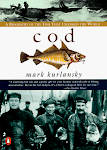
Cod, A biography of the fish that changed the world. By, Mark Kurlansky
Books of '11
- • Four Fish. By, Paul Greenberg
- • Environmental Law. By, Jamie Benidicson
- • Long Term Value Strategy for the Canadian Lobster Industry. By, Gardner Pinfold Market Research Associates
Books of '10
- • Fisheries Economics an introduction. By, Stephen Cunningham, Michael R. Dunn, and David Whitmarsh
- • Tar Sands. Dirty Oil and the Future of a Continent. By, Andrew Nikiforuk
- • Guns, Germs, and Steel. The Fates of Human Societies. By, Jared Diamond.
- • The End of Food. By, Paul Roberts
Books of '09
- • Silent Spring. By, Rachel Carson
- • Sea Sick, the Global Ocean in Crisis. By, Alanna Mitchell
- • The world without us. By, Alan Weisman
- • Bottomfeeder. How to eat ethically in a world of vanashing seafood. By, Taras Grescoe
- • Life in 2030: Exploring a Sustainable Future for Canada. By, John B. Robinson
- • The Whale Warriors. The battle at the bottom of the world to save the planet's largest mammals. By, Peter Heller
- • In a perfect ocean. The state of fisheries and ecosystems in the north atlantic ocean. By, Daniel Pauly and Jay Maclean
- • The end of the line. How overfishing is changing the world and what we eat. By, Charles Clover
Favorite Posts
Labels
- climate change (5)
- coast (1)
- Dear Korea... (2)
- energy (2)
- finning (2)
- fish (10)
- fisheries (9)
- garbage island (2)
- green building (1)
- Guest post (2)
- hypoxia (1)
- Interesting people (5)
- longlines (1)
- movies (1)
- ocean (19)
- organic (1)
- paper (3)
- plastic (4)
- recycling (6)
- seafood (6)
- shark (2)
- water (4)
- whales (1)
Blog Roll
Followers
Visitors
This work is licensed under a Creative Commons Attribution-Noncommercial-No Derivative Works 3.0 Unported License.

Post a Comment