On April 20th a massive blast on the BP Deepwater Horizon rig began a raging fire and caused 11 workers to go missing. On April 22nd the rig sunk and has since caused a major oil spill that continues to grow and spread with each passing day. It is estimated that the ruptured well is spewing 200,000 gallons of oil into the Gulf of Mexico each day. On Friday oil began washing up on Louisiana shores threatening pristine habitats, fisheries, and the livelihoods of the local residents. Louisiana, Florida, Alabama and Mississippi have declared a State of Emergency and have dispatched clean-up crews. Strong winds and waves are making the 'cleanup' difficult with some environmental groups claiming that if BP manages to cleanup 20% of the leaked oil it would be miracle. What is truly frightening is that because the US does not require the oil companies to install pricey fail safe systems, their blowout preventer failed and now they do not know how to stop the spill of oil. BP sent robotic submarines 1,5000 meters down to try to cap the leaks; however, it did not work and now they have warned that it may take several months to stop the flow of oil. At this rate BP could overtake Exxon Valdez which is the worst recorded oil spill in US history.
Perhaps this is the environmental disaster that the US needs to help it steer away from fossil fuels and begin focusing on environmentally safe forms of energy.
Click here to view a collection of news reports about the BP oil spill.
Taking a look at the environmental footprints that we have left behind as well as the road ahead.
BP Deepwater Horizon rig disaster continues to spill oil
Mucilages, also known as Sea Blobs.
As global temperatures continue to rise, the temperature of our oceans steadily increases. The warmer than average sea-surface temperatures provide ideal conditions for the development of sea blobs. Mucilages begin as 'marine snow', which are clusters of minuscule pieces living and dead organic matter. They have mainly appeared in the Mediterranean, where the sea is relatively still and shallow, and were first identified in 1729. The sea blobs have been appearing more often and have been lasting longer, as the weather remains warmer into the winter months.
New studies have shown that the mucilages harbor bacteria and viruses, including E.coli. The issue that I find the most alarming regarding the 'sea blobs' is the threat that they pose for marine animals. The blobs can suffocate animals by coating their gills and the biggest blobs can sink to the sea floor, where it acts like a blanket smothering everything that it covers.
Click here to watch a video about the blobs.
Sources:
http://www.civilianism.com/futurism/?p=3273
http://news.nationalgeographic.com/news/2009/10/091008-giant-sea-mucus-blobs.html
What do you know about the fish you are eating?
When making a big purchase we usually take some time to consider our options, and we always ask lots of questions about the product: what company made it? (ie. what kind is it), where did it come from? how was it made? (what materials were used), what's inside?, etc.
These are all important questions that we need to ask before purchasing, say,a computer.
So, why don't we ask these same questions when purchasing our food. Buying food may not cost as much as a computer, but we are putting it inside of our bodies.
When I say food, I am thinking mainly of meats; cow, pig, and specifically fish. In a world where the fish populations are rapidly decreasing, it amazes me that local supermarkets and restaurants still stock their shelves with 'Fresh Fish' on a daily basis - and customers continue to buy it with no questions asked. The list of questions above can easily be applied when purchasing fish, and your local market or restaurant should be able to provide you with some answers.
Let's quickly go through some of these questions regarding fish and the reasons why they are important to ask.
1. What kind is it? This is the first question that you should ask, especially when it comes to fish like tuna: is it bluefin, yellow tail, big eye... Asking this question allows you to make an ethical choice; was that Atlantic halibut really worth eating if you know that it is a long lived species that matures slowly and abundance has been extremely low. This is an important question as it allows the customer to make a healthy decision and also informs the restaurants and markets that people are looking for answers and sustainable products.
2.Where did it come from? This is an important question because you will be told whether the fish is farmed or wild caught and what body of water it was taken from. Some people believe that eating farmed salmon is a sustainable alternative to wild caught salmon; however, it is important to remember that farmed fish are usually fed with feed made from wild fish, they are usually given antibiotics and vaccines to fight the infections that occur in farmed fish, and the large pens also create water pollution. When ordering salmon the best option is Alaskan Salmon, which is managed well and has a fairly healthy habitat.
3.How was it caught? The answer to this question will provide you with information regarding how much damage was done to ocean life in order to catch your fish. Bottom trawls, longlines, dredges, midwater gillnets, and pelagic longline are the ones to stay away from. These methods of capture have a negative impact on habitat, both physically and biologically, and they also produce high bycatch volumes. The methods of capture with the lowest impact on the ocean are hook and line, purse seines, and midwater trawls.
4. What's inside? With this question you are not literally asking about what is inside the fish, but about what kind of pollutants are in the fish. If the fish was farmed, was it pumped full of antibiotics? If it was wild caught what are the common mercury levels in the species.
Here is a list of websites that are very helpful when trying to find information about edible fish:
www.seachoice.org (Canadian)
www.blueocean.org
www.fishbase.org
www.fao.org
www.mbayaq.org
www.redlist.org
What is in our water?
In recent years there have been numerous studies regarding drinking water around the world. In most cases these studies have revealed that there are a large number of pharmaceutical ingredients present.
In 2004 the Canadian Government released its findings from its first study of pharmaceuticals in Canadian drinking water. The test samples were taken near 20 water treatment plants in Southern Ontario. Nine different drugs were found in the samples, ranging from painkillers to Prozac. Testing of drinking water in Philadelphia revealed that 56 pharmaceuticals or byproducts were present in treated drinking water. And the New York State health department tested the source of the city's water and found heart medicine, infection fighters, estrogen, anti-convulsants, a mood-stabilizer, and a tranquilizer.
So how is all of this getting into our drinking water?
Living in a society where it is possible to pop a pill for any pain or ailment is the primary pollution problem. IMS health global services records show that in 1999 the world drug consumption amounted to $342 billion and in 2006 the number almost doubled to $643 billion. A significant proportion of the drugs that we consume are designed to breakdown slowly and are excreted through urine without being fully metabolized by our bodies, and end up in municipal waste water. The human body is able to metabolize 80% of drugs such as the pain-reliever acetaminophem and the antidepressant fluoxetine; however, chemotherapy (methotrexate), diabetes (metformin), and high blood-pressure (atenol) products are excreted practically unchanged, with the body only absorbing 10-20% of the drug.
What are the effects?
The effects on the human body are still widely unknown; however, environmental effects are already visible. Pharmaceuticals seeping into the waterways are disrupting wildlife. The most visible and documented effect is the feminization of male fish. It has also been noted that fish that are exposed to an anti-depressent drug startle less quickly and impairs its ability to eat. There is growing scientific concern that the ingestion of certain drugs, or combination of drugs, may harm humans over decades of consumption through water. There has been speculation over the possible long term effects from the various drugs: chemotherapy medication could act as a powerful poison, hormones could hamper reproduction and development, depression and epilepsy medication could damage the brain or change behavior, and antibiotics could allow human germs to mutate into more dangerous forms.
What can we do?
Some companies, mainly in Europe, are beginning to use 'Ecolabeling'. This labling can be used on a range of products from over the counter medication to shampoo and house cleaners. The lables provide consumers with trustworthy information regarding the ecological soundness of the product.
If you live in Canada look for Product take-back programs ( www.medicationsreturn.ca)in your area. These programs accept expired or unused medications for environmentally safe disposal.
The two most important steps that we need to take is to educate ourselves and share our knowledge with others. And most importantly reduce your own personal medical consumption. Next time you are about to pop a pill think about this: "Studies show that half the antibiotics prescribed by General Practitioners surgeries are unnecesary. Likewise more than 30 percent of pills work because of a placebo effect: the actual chemicals do nothing" (ECOLOGIST May 2009).
Sources:
http://www.pittsburghlive.com/x/pittsburghtrib/news/mostread/s_556442.html
http://www.newmediaexplorer.org/emma_holister/2004/11/16/prozac_painkillers_hormones_found.htm
http://watertreatment.ca/2009/medication-present-in-st-lawrence-river/
www.medicationsreturn.ca
http://www.ec.gc.ca/INRE-NWRI/default.asp?lang=En&n=C00A589F-1&offset=22&toc=show
http://www.imshealth.com/portal/site/imshealth/
About Me
- Kait
- I am a 20 something Canadian woman currently living in Vancouver. I am greatly interested in assisting in the search for solutions for global environmental sustainability. It's time we all took personal responsibility for the state of our environment.
Search this blog
Currently Reading...
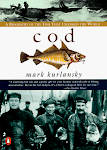
Cod, A biography of the fish that changed the world. By, Mark Kurlansky
Books of '11
- • Four Fish. By, Paul Greenberg
- • Environmental Law. By, Jamie Benidicson
- • Long Term Value Strategy for the Canadian Lobster Industry. By, Gardner Pinfold Market Research Associates
Books of '10
- • Fisheries Economics an introduction. By, Stephen Cunningham, Michael R. Dunn, and David Whitmarsh
- • Tar Sands. Dirty Oil and the Future of a Continent. By, Andrew Nikiforuk
- • Guns, Germs, and Steel. The Fates of Human Societies. By, Jared Diamond.
- • The End of Food. By, Paul Roberts
Books of '09
- • Silent Spring. By, Rachel Carson
- • Sea Sick, the Global Ocean in Crisis. By, Alanna Mitchell
- • The world without us. By, Alan Weisman
- • Bottomfeeder. How to eat ethically in a world of vanashing seafood. By, Taras Grescoe
- • Life in 2030: Exploring a Sustainable Future for Canada. By, John B. Robinson
- • The Whale Warriors. The battle at the bottom of the world to save the planet's largest mammals. By, Peter Heller
- • In a perfect ocean. The state of fisheries and ecosystems in the north atlantic ocean. By, Daniel Pauly and Jay Maclean
- • The end of the line. How overfishing is changing the world and what we eat. By, Charles Clover
Favorite Posts
Labels
- climate change (5)
- coast (1)
- Dear Korea... (2)
- energy (2)
- finning (2)
- fish (10)
- fisheries (9)
- garbage island (2)
- green building (1)
- Guest post (2)
- hypoxia (1)
- Interesting people (5)
- longlines (1)
- movies (1)
- ocean (19)
- organic (1)
- paper (3)
- plastic (4)
- recycling (6)
- seafood (6)
- shark (2)
- water (4)
- whales (1)
Blog Roll
Followers
Visitors
This work is licensed under a Creative Commons Attribution-Noncommercial-No Derivative Works 3.0 Unported License.


Post a Comment