I am sure that most of you have already heard the disappointing news regarding the rejection of the proposal to ban the export of Atlantic Bluefin Tuna, but I thought I should write a quick post about it for anyone who is still in the dark.
The Convention on International Trade in Endangered Species (CITES)is an international agreement between governments. Its aim is to ensure that international trade in specimens of wild animals and plants does not threaten their survival (http://www.cites.org/eng/disc/what.shtml).
On March 18th 2010, CITES rejected the proposal to protect Bluefin tuna. Japan, who imports 80% of the tuna played a big part in the rejection of the proposal. Many of the poorer fishing nations followed in Japan's shadow claiming that the ban would devastate their economies.
Japan and some of the other fishing nations also claim that CITES should not play a role in regulating marine species. This notion entrenches the idea that marine species are not animals and that they do not deserve the same protection as land animals. However, the International Commission for the Conservation of Atlantic Tunas (ICATT) who is supposed to be in charge of regulating tuna has let the tuna down time and time again. The most recent let down came in November when ICCAT reduced quotas from 19,500 to 13,500when the ICCAT scientist recommended placing a ban on Bluefin Tuna fisheries. (see previous post regarding ICCAT November decision).
This seems like the last nail in the coffin for Bluefin Tuna. Certain governments have been blinded by short term profit and have failed to take into account the science that has been provided or the long term effects of such aggressive fishing practices. All of this has put Bluefin Tuna on the path to extinction, and it seems as though it will come much sooner than we thought.
Click here for a GreenPeace article regarding CITES decision.
Taking a look at the environmental footprints that we have left behind as well as the road ahead.
The end is near for Bluefin Tuna...
Fish 2 Fork
If you live in the US or the UK eating sustainably caught seafood in restaurants just for a lot easier. Charles Clover the author of The End of the Line has created a new rating system based on the effects the restauarants are having on the ocean: " The fish2fork rating system is designed to inform customers whether a restaurant is doing all it can to serve sustainable seafood and reduce its impact on our oceans at a time when overfishing is perhaps the greatest threat to marine life on 70 per cent of the planet’s surface."
Fish2Fork also provides up to date information regarding the lastest headlines concerning fisheries and the ocean.
When it comes to books: Borrow don't Buy...
When I was a child my mother managed a bookstore, needless to say our house was (and continues to be) full of books. As I grew up I felt the need to build my own personal library with books that I love; however, now when I look at the piles of books that I have purchased over the years I can't help but feel guilty. All of my books (which cost a fortune to move everytime I relocate myself) now represent the millions of trees that are cut down to make books, magazines, and newspapers.
Most books are made from virgin (non-recycled) paper and most magazines are made from coated virgin magazine paper. When you think about the numbers things begin to seem a little bit clearer:
- 1 ton of uncoated virgin (non-recycled) printing and office paper uses 24 trees
- 1 ton of 100% virgin (non-recycled) newsprint uses 12 trees
- 1 ton of coated, higher-end virgin magazine paper (used for magazines like National Geographic and many others) uses a little more than 15 trees (15.36)
- 1 tree makes 16.67 reams of copy paper or 8,333.3 sheets. (info from conserveatree)
With these numbers I began thinking about the school that I currently work at and how on average we go through about 2 reams of paper per day. Two reams of paper per day means 10 reams of paper per week, which means 520 reams of paper per year. 520 reams of paper is roughly 31 trees per year! 31 trees and that is only for copy paper, the number would continue to climb if I added in tissue, paper towel, toilet paper, and all of the arts and craft supplies. 31 trees, and this only a small school of around 70 children, I can only imagine what a large school would go through!
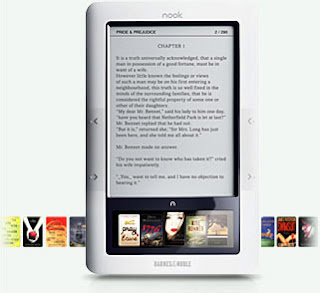
So with all of this in mind I have decided to limit my purchases of new books and try to borrow as many as possible from friends and my local library (which is a little difficuly as I live in Korea and the English section is quite small). If I cannot borrow a specific book that I am looking for I then make my way to a used bookstore, where I don't feel quite as guilty making a purchase. And I have been thinking more and more about buying an e-reader something like the 'nook' which can store up to 1,500 books. There are also options that you can look at to help reduce your impact on the earth when it comes to purchasing books. Companies like Eco-Libris are trying to balance out books by planting trees and supporting green books. All you have to do is visit the website buy some stickers to put on your books and for each sticker you purchase they will plant a tree.

All in all I just thought that I should share my new mantra when it comes to books: Borrow don't Buy.
Korean Investment in Ontario's Green Energy.
I read a really interesting article today on 'Futurism Now' . It's particularly interesting to me because it involves a Green Energy deal between the country that I have been living in for the past year and a half and the Canadian province that I grew up in.
Taken from 'Futurism Now':
25 January 2010 – The Ontario government has just signed an agreement that will (reportedly) bring more green energy and new jobs to Ontario, Canada.
A consortium led by Samsung C&T Corporation and the Korea Electric Power Corporation (KEPCO) will invest CAD$7 billion (£4.12 Billion) to generate 2,500 megawatts of wind and solar power. These projects will triple Ontario’s output from renewable wind and solar sources and provide clean electricity to more than 580,000 households. The investment will also lead to more than 16,000 new green energy jobs to build, install and operate the renewable generation projects.
QUICK FACTS
More than 1,200 megawatts of new renewable projects, representing CAD$2.8 billion (£1.65 billion) of investment, have started up in Ontario since 2003.
$7-Billion (£4.12 Billion) Investment Means Green Energy and 16,000 New Jobs For Ontario, Canada
Ontario is Canada’s leading province in wind and solar power.
The Green Energy Act will create 50,000 new jobs in the green energy sector.
CO2 emissions from coal-fired power generation are 73 per cent lower than 2003 levels, with four more units coming offline in fall, 2010.
Why aren’t more deals like this being made in the U.S.?
The Korean consortium will also work with major partners to attract four manufacturing plants. This will lead to the creation of 1,440 manufacturing and related jobs building wind and solar technology for use in Ontario and export across North America.
The consortium fully intends to use Ontario-made steel in its renewable energy projects, such as constructing its wind turbine towers.
This is the single-largest investment in renewable energy in provincial history. The consortium chose Ontario because the province’s Green Energy Act guarantees stable rates for renewable energy.
“Thanks to today’s announcement, we will be delivering more green energy for Ontarians to use — and more green energy products for North America to buy. With this step, Ontario is becoming the place to be for green energy manufacturing in North America,” said Dalton McGuinty, Premier of Ontario.
“We commend Ontario for creating a welcoming climate for green energy investment. Samsung takes pride in its global efforts to support a more sustainable future and looks forward to working with Ontario residents and businesses to create clean, green power,” said Sung-Ha Chi, President and CEO, Samsung C&T Corporation.
“This is an exciting opportunity to help create new manufacturing facilities and be on the cutting edge of an emerging renewable energy supply sector in Ontario,” said Chan-Ki Jung, Executive Vice-President, Korea Electric Power Corporation.
Recycling~ war into love
Lovetta Conto is a sixteen year old who fled her home country of Liberia to Ghana to escape civil war. While growing up in a refugee camp Lovetta met Cori Stern, the founder of Strongheart Fellowship, which is a "social-entrepreneurship program designed to help bright, resilient young people from extremely challenging circumstances around the globe develop into compassionate, innovative problem-solvers and leaders that can affect significant social change".
With the help of Strongheart Lovetta was able to follow her dream of escaping the refugee camp and become a jewelry designer for Akawelle. Using shell casings from the thousands of bullets that were fired in Liberia, Lovetta creates necklaces. She melts the bullet shells down and pours them into a mold shaped like a leaf pendant with the word 'life' inscribe on it to remind that 'that new life can begin after hardship'. The bottom of the bullet shell is also used as a pendent and is left in its original state 'to remember what is was like before'.
Photo: Carolyn Cole, LA Times, 2003Happy New Year!
About Me
- Kait
- I am a 20 something Canadian woman currently living in Vancouver. I am greatly interested in assisting in the search for solutions for global environmental sustainability. It's time we all took personal responsibility for the state of our environment.
Search this blog
Currently Reading...
Cod, A biography of the fish that changed the world. By, Mark Kurlansky
Books of '11
- • Four Fish. By, Paul Greenberg
- • Environmental Law. By, Jamie Benidicson
- • Long Term Value Strategy for the Canadian Lobster Industry. By, Gardner Pinfold Market Research Associates
Books of '10
- • Fisheries Economics an introduction. By, Stephen Cunningham, Michael R. Dunn, and David Whitmarsh
- • Tar Sands. Dirty Oil and the Future of a Continent. By, Andrew Nikiforuk
- • Guns, Germs, and Steel. The Fates of Human Societies. By, Jared Diamond.
- • The End of Food. By, Paul Roberts
Books of '09
- • Silent Spring. By, Rachel Carson
- • Sea Sick, the Global Ocean in Crisis. By, Alanna Mitchell
- • The world without us. By, Alan Weisman
- • Bottomfeeder. How to eat ethically in a world of vanashing seafood. By, Taras Grescoe
- • Life in 2030: Exploring a Sustainable Future for Canada. By, John B. Robinson
- • The Whale Warriors. The battle at the bottom of the world to save the planet's largest mammals. By, Peter Heller
- • In a perfect ocean. The state of fisheries and ecosystems in the north atlantic ocean. By, Daniel Pauly and Jay Maclean
- • The end of the line. How overfishing is changing the world and what we eat. By, Charles Clover
Favorite Posts
Labels
- climate change (5)
- coast (1)
- Dear Korea... (2)
- energy (2)
- finning (2)
- fish (10)
- fisheries (9)
- garbage island (2)
- green building (1)
- Guest post (2)
- hypoxia (1)
- Interesting people (5)
- longlines (1)
- movies (1)
- ocean (19)
- organic (1)
- paper (3)
- plastic (4)
- recycling (6)
- seafood (6)
- shark (2)
- water (4)
- whales (1)
Blog Roll
Followers
Visitors
This work is licensed under a Creative Commons Attribution-Noncommercial-No Derivative Works 3.0 Unported License.


Post a Comment