Today I found a really interesting website called 'Off the Hook'. It is a group of people based in Nova Scotia who have taken initiative to create a Community Supported Fishery. If you live in Halifax you can invest in a share of the 'Off the Hook' catch to help support to local fishers, coastal communities, and a low-impact fishing method. The money that you pay goes directly to the fishing co-op, which pays the fishers a fair price for their catch. And in exchange you receive fresh sustainably caught fish each week for 8 weeks!
To learn more about Off the Hook, or to sign up to get your share for the fall season check out their website at: http://www.offthehookcsf.ca
Taking a look at the environmental footprints that we have left behind as well as the road ahead.
Off the Hook ~ Community Supported Fishery
SaveOurGulf.org
As oil continues to pump out into the Gulf of Mexico, I feel as though the news casters are becoming tired of reporting on the disaster. Today I found a great site Save our Gulf. It provides up to date information about the spill and what is happening in and around the Gulf.
Green Film Festival in Seoul: 'Greenlit' and 'Sweet Crude'
This past weekend I watched a few movies that were part of the Green Film Festival in Seoul (GFFIS). I was thrilled when I heard about the festival and was even more excited when I saw the list of some of the films that would be featured. It was a pretty rainy weekend here in Seoul so it made for a perfect day (and night) sitting inside a cozy theatre watching some green movies.
During the afternoon we saw 'Greenlit' and a collection of shorts: Ice Blossoms, Let`s Pollute, How to Destroy the World - Rubbish -Transport, Skylight, and The Bill. All in all I really enjoyed all of the shorts, especially the 'How to Destroy the World' clips; however, I cannot say the same for 'Greenlit'. This movie solidified my belief that Hollywood is run by a bunch of nitwits, whose only concern is the almighty dollar as well as creating a false sense of security and pacifism within its target audience, which in most cases I believe to be ALL of North America. At some points during the film I got so angry at the frustratingly oblivious narrator, Miranda Bailey (executive producer of The SQUID AND THE WHALE) that I found myself talking to the screen in the crowded theatre.
Here is the synopsis of the movie that is offered on the GIFFS website: Movie people are legendarily liberal and left leaning, particularly when it comes to the environment. GREENLIT puts their commitment to the test as filmmaker Miranda Bailey (executive producer of The SQUID AND THE WHALE) follows the production of THE RIVER WHY, starring Zach Gilford (FRIDAY NIGHT LIGHTS) as it attempts to keep an environmentally friendly set thanks to the supervision of a "green" consultant. What starts off with great enthusiasm quickly devolves in this insightful and hilarious film.
I would like to know who wrote this synopsis and at what point did they think this movie was hilarious. And the only insightful part of this film is that it shows us how arrogant and ignorant these movie companies (and the people that work for them) really are.
At the end this movie I felt the defeat and frustration of the 'environmental consultant', who's love for the environment had her knee deep in a compost dumpster after a crew member mixed in packing peanuts with the bag of compost... not quite hilarious.
The second movie that we saw was 'Sweet Crude', which was a really powerful and insightful film. The focus of the film is the Niger Delta and the environmental and economic destruction of its surroundings due to the oil extraction that has been taking place over the past 50 years. This film feels very intimate because it is made up of the personal stories of struggle of the villagers from Oporoza and their determination to have their voices heard. We are presented with the greed and corruption of the government that has tried to silence the voice of its people, which has only made them fight back with more force. This is an important film, especially in the wake of the BP disaster that has taken place in the Gulf of Mexico. As North Americans we could not believe that the BP disaster was allowed to take place and that the company should be responsible for the cleaning - now think about living alongside a waterway that has had the same amount of oil pollution, but for 50 consecutive years with no one taking responsibility and the government allowing it to continue. Scary.
Has it been a year already!?
Visions of Green and Blue has made it to its one year anniversary!
Just wanted to say a big THANK YOU to all those people out there who continue to visit and read!
I will soon begin a new adventure, leaving Korea and moving back to Canada to start a graduate program in Environment and Resource Management. So I am sure that the program will fuel me with lots of interesting things to share here!
Thanks again for reading :)
-Kait
BP Deepwater Horizon rig disaster continues to spill oil
On April 20th a massive blast on the BP Deepwater Horizon rig began a raging fire and caused 11 workers to go missing. On April 22nd the rig sunk and has since caused a major oil spill that continues to grow and spread with each passing day. It is estimated that the ruptured well is spewing 200,000 gallons of oil into the Gulf of Mexico each day. On Friday oil began washing up on Louisiana shores threatening pristine habitats, fisheries, and the livelihoods of the local residents. Louisiana, Florida, Alabama and Mississippi have declared a State of Emergency and have dispatched clean-up crews. Strong winds and waves are making the 'cleanup' difficult with some environmental groups claiming that if BP manages to cleanup 20% of the leaked oil it would be miracle. What is truly frightening is that because the US does not require the oil companies to install pricey fail safe systems, their blowout preventer failed and now they do not know how to stop the spill of oil. BP sent robotic submarines 1,5000 meters down to try to cap the leaks; however, it did not work and now they have warned that it may take several months to stop the flow of oil. At this rate BP could overtake Exxon Valdez which is the worst recorded oil spill in US history.
Perhaps this is the environmental disaster that the US needs to help it steer away from fossil fuels and begin focusing on environmentally safe forms of energy.
Click here to view a collection of news reports about the BP oil spill.
Brazil dam tender triggers protest
The Amazon rainforest faces yet another challenge...
Al Jazeera English - Americas - Brazil dam tender triggers protest
(The following article was taken from Al Jazeera English)
Brazil dam tender triggers protest
The Belo Monte threatens livelihoods of tens of thousands of Brazilian Indians [AFP]
Environmentalists in Brazil are protesting against the awarding of a tender for a controversial hydroelectric project.
Around 500 activists of Greenpeace, the environment group, dumped three tonnes of manure in front of the National Electric Energy Agency's offices in Brasilia, where the tender was speedily awarded on Tuesday.
The government launched the bidding process to begin construction of the Belo Monte dam after successfully appealing against a suspension order.
The tender was awarded to Norte Energia, a consortium led by a subsidiary of Electrobras, the state electricity company, after a series of court injunctions that had blocked and unblocked the auction process.
Opponents of the dam construction said they would not be deterred by the awarding of the tender.
Renata Pinheiro, of the Xingu Vivo movement, said: "We will not be discouraged, we will continue to demonstrate."
The protesters said said they plan to occupy some of the 500sq km of the Amazon rainforest land that Greenpeace estimates would be flooded by the Belo Monte dam.
Livelihoods threatened
Indigenous groups and environmental activists have staged several demonstrations in recent weeks, saying the dam is ecologically irresponsible.
They also say it will threaten the livelihood of 12,000 families, most of them Brazilian Indians living on the banks of the Xingu river that would feed the facility.
IN DEPTH
"We, the indigenous, demand justice and respect," read one placard carried by protesters in front of the National Electric Energy Agency's offices.
The regional justice ministry in the state of Para tried to stall tenders for the project in a ruling, calling the dam "an affront to environmental laws".
It said too many questions remained over how the dam would affect flora and fauna in the region, and what would become of the families who would have to be relocated.
But the project has been defended by the local population who hope to benefit from the estimated 18,000 and 80,000 direct and indirect jobs the government says the project will create.
Energy boost
The government has insisted the dam is essential to its plan to boost energy production in Brazil, Latin America's biggest economy.
For a construction cost of $11.2bn, Belo Monte is expected to be able to produce 11,000 megawatts, which could supply 20 million homes with power.
The dam would be the third-biggest in the world, after China's Three Gorges facility, and Brazil's Itaipu dam in the south.
A Greenpeace spokesman said the government should have used other possible energy sources such as wind power, biomass or solar.
Hydroelectric energy accounts for 73 per cent of the energy produced in Brazil.
About Me
- Kait
- I am a 20 something Canadian woman currently living in Vancouver. I am greatly interested in assisting in the search for solutions for global environmental sustainability. It's time we all took personal responsibility for the state of our environment.
Search this blog
Currently Reading...
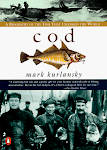
Cod, A biography of the fish that changed the world. By, Mark Kurlansky
Books of '11
- • Four Fish. By, Paul Greenberg
- • Environmental Law. By, Jamie Benidicson
- • Long Term Value Strategy for the Canadian Lobster Industry. By, Gardner Pinfold Market Research Associates
Books of '10
- • Fisheries Economics an introduction. By, Stephen Cunningham, Michael R. Dunn, and David Whitmarsh
- • Tar Sands. Dirty Oil and the Future of a Continent. By, Andrew Nikiforuk
- • Guns, Germs, and Steel. The Fates of Human Societies. By, Jared Diamond.
- • The End of Food. By, Paul Roberts
Books of '09
- • Silent Spring. By, Rachel Carson
- • Sea Sick, the Global Ocean in Crisis. By, Alanna Mitchell
- • The world without us. By, Alan Weisman
- • Bottomfeeder. How to eat ethically in a world of vanashing seafood. By, Taras Grescoe
- • Life in 2030: Exploring a Sustainable Future for Canada. By, John B. Robinson
- • The Whale Warriors. The battle at the bottom of the world to save the planet's largest mammals. By, Peter Heller
- • In a perfect ocean. The state of fisheries and ecosystems in the north atlantic ocean. By, Daniel Pauly and Jay Maclean
- • The end of the line. How overfishing is changing the world and what we eat. By, Charles Clover
Favorite Posts
Labels
- climate change (5)
- coast (1)
- Dear Korea... (2)
- energy (2)
- finning (2)
- fish (10)
- fisheries (9)
- garbage island (2)
- green building (1)
- Guest post (2)
- hypoxia (1)
- Interesting people (5)
- longlines (1)
- movies (1)
- ocean (19)
- organic (1)
- paper (3)
- plastic (4)
- recycling (6)
- seafood (6)
- shark (2)
- water (4)
- whales (1)
Blog Roll
Followers
Visitors
This work is licensed under a Creative Commons Attribution-Noncommercial-No Derivative Works 3.0 Unported License.


Post a Comment