If you have any questions regarding anything on my blog please feel free to contact me and I will get back to you as soon as I can! Likewise, if you have any suggestions for future posts regarding the environment, sustainability, or pollution that you would like to see on Visions of Green and Blue please let me know!
Thanks so much for reading!
Taking a look at the environmental footprints that we have left behind as well as the road ahead.
Contact
Just incase you haven't heard about Garbage Island
Image from: www.algalita.org
Garbage Island - these words conjure up an instant mental image of a vast area of ocean covered in a mass of floating trash- plastic bags, beer cans, water bottles, bike parts, toys, shoes... The truth is, garbage island is a much more terrifying issue. It is not composed of solid waste floating in the water but the tiny fragments of plastic that will never biodegrade, which are ingested by marine animals and travels through the food-chain. Each year more than one million birds and marine animals die from consuming or becoming caught in plastic and debris.
Lying in the central North Pacific ocean, garbage island is estimated to be twice the size of Texas and may contain over 100 million tons of debris. The floating debris is accumulated in the slow moving clockwise currents of the North Pacific Gyre. It is believed that 80% of the garbage is land-based and the remaining 20% come from ships at sea. The land-based trash traveling from the west coast of North America arrives at the center of garbage island in about 5 years and trash from the East coast of Asia arrives in a year or less.
One of the first people to discover and take action in regards to garbage island was Charles Moore, a California based sea-captain and ocean researcher. On his return from a yachting competition he traveled through the North Pacific Gyre where he stumbled upon the worlds largest landfill. Since his discovery he has developed the Algalita Marine Research Foundation and has researched and studied the development of the trash and its effects on marine life.
Most scientist have deemed it impossible to thoroughly clean up the floating waste, as it spans such a great distance and extends 100 feet below the oceans surface. What we can do is make the effort to use alternative materials to plastic. Purchase an aluminum reusable water bottle in place of plastic bottles, bring cloth bags to the grocery store, if you see a plastic bag or bottle pick it up instead of letting it get carried to the closest body of water. It is up to us to make a difference; Garbage Island will not go away, but we can change the amount of trash that we produce and improve our methods of recycling so that we can eliminate its growth.
Captain Charles Moore at TED:
http://www.ted.com/index.php/talks/capt_charles_moore_on_the_seas_of_plastic.html
VBS Toxic Garbage Island: an excellent 12 part documentary that everyone should watch.
http://www.vbs.tv/shows/toxic/garbage-island/index.php
The UN Environment Program: Plastic Ocean Report
www.unep.org/regionalseas/marinelitter/publications/docs/plastic_ocean_
Sources:
www.algalita.org
www.science.howstuffworks.com/great-pacific-garbage-patch
www.unep.org
http://en.wikipedia.org/wiki/Great_Pacific_Garbage_Patch
Shark!
Sharks have been around for 400 million years and in the past few decades humans have managed to decimate shark populations by 90%. The fishing practices that are used to catch these beautiful animals is horrifying. They are caught on longlines then hauled onto the fishing vessel, (many still living and breathing) where their fins are hacked off. The helpless shark is then tossed back into the sea and sinks where it either suffocates or gets eaten alive. It is estimated that 100 million sharks are killed this way each year. There is little monitoring of shark fishing and too few regulations are in place.
We know so little about the 375 types of sharks, yet their population numbers continue to fall as wealth and greed drive the hunt for fins which are used for sharkfin soup and traditional cures.

Please visit the following sites to find more information on finning and to sign some petitions to stop it:
http://www.sharkwater.com/
http://www.savingsharks.com/
http://www.sharks.org/
http://www.sharktrust.org/content.asp?did=32610
http://www.theunderwaterchannel.tv/editorial/not-on-our-menu
Reduce, reuse, recycle - new terms for Calgary, Alberta.
In April 2009 Calgary, Alberta residents received their first blue-bins as part of the city wide curbside recycling program, "Too Good To Waste". As one Canada's richest and biggest cities, why has it taken so long for Calgary to join the world of recycling?
Growing up in Ontario it was ingrained into our minds that throwing recyclable materials in the trash was wrong. We were taught 'reduce, reuse, recycle' songs at school and watched "Captain Planet" cartoons at home. For Calgarians things were (are) different. With no Blue-box recycling program, residents who wanted to recycle were forced to either drive to a depot or pay for private home pickup. The most common method of dealing with recycling was to not recycle at all, everything went in the garbage with the rest of the waste. On average Calgary recycles only 20%(residential) of their waste, while Toronto recycles 42%(2006, residential), and Vancouver 55% (latest released numbers for all sectors).
There has been a lot of grumbling in Calgary regarding the new program. Some complaints are understandable - not being able to recycle plastic milk jugs, when the previous private companies picked them up, however; some are not so understandable, such as complaints about monthly fees. Every city that has a recycling program has a fee, whether it be included in your taxes or added onto your monthly utility bill (Calgary). It is time that people realize that you are not simply paying for your recycling to be taken away, you are paying for cleaner spaces for Canada's future generations.
Calgary, welcome to blue-bin recycling. You are only about 20 years behind schedule, but I guess you could say 'Better late than never' (?).
About Me
- Kait
- I am a 20 something Canadian woman currently living in Vancouver. I am greatly interested in assisting in the search for solutions for global environmental sustainability. It's time we all took personal responsibility for the state of our environment.
Search this blog
Currently Reading...
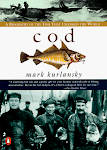
Cod, A biography of the fish that changed the world. By, Mark Kurlansky
Books of '11
- • Four Fish. By, Paul Greenberg
- • Environmental Law. By, Jamie Benidicson
- • Long Term Value Strategy for the Canadian Lobster Industry. By, Gardner Pinfold Market Research Associates
Books of '10
- • Fisheries Economics an introduction. By, Stephen Cunningham, Michael R. Dunn, and David Whitmarsh
- • Tar Sands. Dirty Oil and the Future of a Continent. By, Andrew Nikiforuk
- • Guns, Germs, and Steel. The Fates of Human Societies. By, Jared Diamond.
- • The End of Food. By, Paul Roberts
Books of '09
- • Silent Spring. By, Rachel Carson
- • Sea Sick, the Global Ocean in Crisis. By, Alanna Mitchell
- • The world without us. By, Alan Weisman
- • Bottomfeeder. How to eat ethically in a world of vanashing seafood. By, Taras Grescoe
- • Life in 2030: Exploring a Sustainable Future for Canada. By, John B. Robinson
- • The Whale Warriors. The battle at the bottom of the world to save the planet's largest mammals. By, Peter Heller
- • In a perfect ocean. The state of fisheries and ecosystems in the north atlantic ocean. By, Daniel Pauly and Jay Maclean
- • The end of the line. How overfishing is changing the world and what we eat. By, Charles Clover
Favorite Posts
Labels
- climate change (5)
- coast (1)
- Dear Korea... (2)
- energy (2)
- finning (2)
- fish (10)
- fisheries (9)
- garbage island (2)
- green building (1)
- Guest post (2)
- hypoxia (1)
- Interesting people (5)
- longlines (1)
- movies (1)
- ocean (19)
- organic (1)
- paper (3)
- plastic (4)
- recycling (6)
- seafood (6)
- shark (2)
- water (4)
- whales (1)
Blog Roll
Followers
Visitors
This work is licensed under a Creative Commons Attribution-Noncommercial-No Derivative Works 3.0 Unported License.


Post a Comment