CBC radio one's 'Quirks and Quarks' had an excellent show on September 12th 2009: 'Oceans of Trouble'. The host Bob McDonald talked with Alanna Mitchell, author of 'Sea Sick, the global ocean in crisis', about the impact of climate change on our oceans. They discussed the five main areas that Mitchell sees as the biggest problems for our oceans: dead zones, acidification, coral reef decline, overfishing and marine debris. McDonald also talks with a number of specialized scientists regarding these five problem areas.
It's a great listen for anyone who is interested in the state of our oceans.
http://www.cbc.ca/quirks/archives/09-10/qq-2009-09-12.html
Taking a look at the environmental footprints that we have left behind as well as the road ahead.
An Interesting listen: Oceans of Trouble
Green Living: Avoiding Asbestos. Guest post by James O'Shea.
Going green used to be considered expensive and a luxury for those who could afford the trend. Now it appears that we are learning that not only is adopting more environmentally conscious attitudes good for our economic situation, but also our….health? Yes, if we dig a bit deeper we can see that dirty industries and backwards policy is actually harming the health of the earth for our children and the health of her inhabitants today.
There are two levels of health consequences associated with dirty industry, both direct and indirect. The direct consequences are examples like increased asthma rates in areas with high smog indices. Chlorofluorocarbon release into the atmosphere has shown to decrease the filter of direct sunlight on the planet, resulting in more concentrated ultraviolet light reaching the surface of the earth. Perhaps it is no surprise then that in countries with depleted atmospheric gas, skin cancer rates are among the highest in the world.
The indirect health consequences are harder to see immediately, but closer examination reveals that these are, in fact, perhaps the most hazardous. Bi-products of dirty and backwards industries, such as coal and oil processing, include cancer causing substances like asbestos and benzene. A U.K. study conducted in 2002 indicated that coal and oil industry workers are at a much higher risk of developing mesothelioma and leukemia.
Can we really afford to continue on the path we were on before? Investment in clean industry means not a healthier planet for our children and grandchildren, but also a healthier place for us to live today.
--September 23, 2009 Written by James O’ Shea with the maacenter
USBcell
Finding Green Products
I am always trying to find out how green the products I use at home actually are, and yesterday while searching for information about my shampoo I stumbled upon a wonderful website. Good Guide allows you to search by category (ie. food, personal care, household chemicals, and toys) or you can simply use the 'search' button to look for a specific product.
How it works:
The Good Guide provides you with an overall rating out of 10, which is based on a number of factors concerning Health, Environment, and Society. They also provide you with Ingredient ratings and a list of the products certification and listings. When it comes to foods, Good Guide also provides you with a Nutirtion summary (saturated fats, cholestoral, sodium, and sugars), as well as the Nutrition facts.
On top of all of the product information, the website also provides readers with news and recall updates as well as a list of helpful 'GoodGuide Issues'.
If you are interested in finding out a little more information about the safety of the products you use and their impact on the environment, the Good Guide is an excellent place to start.
A picture is worth a thousand words...
This beautiful, yet terrifying image was awarded 'Unicef's Photo of the Year Award, 2008'. The image titled "Surviving Haiti" was taken by 21 year old, Belgian photographer Alice Smeets. The picture presents us with a young girl in Port-au-Prince, wearing a clean white dress with matching ribbons in her hair, wadding barefoot through filthy water and trash.
This photo not only gives us a glimpse into the horrid conditions in which Port-au-Prince residents live, but is also a visual warning for those lucky enough not living in a slum of what could happen. Landfills and 'developing nations' can only hold so much trash, what will happen when we have filled them?
Alice Smeet's blog: http://blog.alicesmeets.com/2008/12/19/the-unicef-photo-of-the-year/
There are some other fantastic Unicef contest images worth checking out: http://www.unicef.de/foto/2008/english/index_engl_2008.htm
What's in your Exfoliant?
How to comment...
A big thanks to all those who have been checking up on my blog lately!
I received a note from a reader regarding posting comments on my blog ~ I am so sorry, I am still trying to sort out a few of the bugs for this template. I know it is very frustrating when things do not work on a blog and I apologize if anyone else has had a hard time with commenting! I will try to get this fixed as soon as I can.
If you are interested in leaving a comment, click on the greenish brown number in brackets beside "Comments" for the specific post and comment away!
Looking forward to hearing from you!
Thanks for reading!
About Me
- Kait
- I am a 20 something Canadian woman currently living in Vancouver. I am greatly interested in assisting in the search for solutions for global environmental sustainability. It's time we all took personal responsibility for the state of our environment.
Search this blog
Currently Reading...
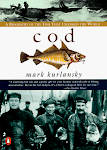
Cod, A biography of the fish that changed the world. By, Mark Kurlansky
Books of '11
- • Four Fish. By, Paul Greenberg
- • Environmental Law. By, Jamie Benidicson
- • Long Term Value Strategy for the Canadian Lobster Industry. By, Gardner Pinfold Market Research Associates
Books of '10
- • Fisheries Economics an introduction. By, Stephen Cunningham, Michael R. Dunn, and David Whitmarsh
- • Tar Sands. Dirty Oil and the Future of a Continent. By, Andrew Nikiforuk
- • Guns, Germs, and Steel. The Fates of Human Societies. By, Jared Diamond.
- • The End of Food. By, Paul Roberts
Books of '09
- • Silent Spring. By, Rachel Carson
- • Sea Sick, the Global Ocean in Crisis. By, Alanna Mitchell
- • The world without us. By, Alan Weisman
- • Bottomfeeder. How to eat ethically in a world of vanashing seafood. By, Taras Grescoe
- • Life in 2030: Exploring a Sustainable Future for Canada. By, John B. Robinson
- • The Whale Warriors. The battle at the bottom of the world to save the planet's largest mammals. By, Peter Heller
- • In a perfect ocean. The state of fisheries and ecosystems in the north atlantic ocean. By, Daniel Pauly and Jay Maclean
- • The end of the line. How overfishing is changing the world and what we eat. By, Charles Clover
Favorite Posts
Labels
- climate change (5)
- coast (1)
- Dear Korea... (2)
- energy (2)
- finning (2)
- fish (10)
- fisheries (9)
- garbage island (2)
- green building (1)
- Guest post (2)
- hypoxia (1)
- Interesting people (5)
- longlines (1)
- movies (1)
- ocean (19)
- organic (1)
- paper (3)
- plastic (4)
- recycling (6)
- seafood (6)
- shark (2)
- water (4)
- whales (1)
Blog Roll
Followers
Visitors
This work is licensed under a Creative Commons Attribution-Noncommercial-No Derivative Works 3.0 Unported License.


Post a Comment