Taking a look at the environmental footprints that we have left behind as well as the road ahead.
Bluefin tuna - greed trumps science.
Bluefin tuna is one of the most over exploited fisheries in the world. Its current biomass is estimated to be less than 15% of its original stock, before industrial fishing. In October, scientists working for the International Commission for the Conservation of Atlantic Tunas (ICCAT) recommended a ban on fishing to give the stocks a chance of recovering.
On November 15th ICCAT dismissed the information provided by their own scientists and agreed to set the new quota at 13,500 tons of fish, down from 19,950 tons last year. This does not come as a complete surprise as ICCAT has a history of setting their quotas far beyond what their researchers recommend. This quota not only creates risk of commercial extinction to the critically endangered fish from 'legal' fishing, it does not account for the overfishing and illegal fishing that takes place.
The continued failure of ICCAT to manage the bluefin stock has forced the Principality of Monaco into action. Last month Monaco submitted a proposal to the Convention on International Trade in Endangered Species(CITES) to list bluefin tuna under Appendix I, which would make fishing it illegal. CITES will meet in March 2010, which is when the fate of bluefin tuna will be decided.
Resources:
Greenpeace
Mongabay
EUobserver
Treehugger
Pew Charitable Trust
Pneumonic Plague in the Ukraine
While the world continues on with its paranoia parade concerning swine flu, the media is ignoring (or covering up) a real health issue that is developing in the Ukraine. The Pneumonic Plague has been spreading, and quickly with cases now popping up in neighboring countries. As of November 13th in the Ukraine there were 1,308,911 sick, 69,691 hospitalized, and 265 dead, with autopsies revealing black lungs filled with blood.
The real issue with this spreading virus is the politics that are involved. There are some bloggers out there who believe that this is the beginning of the end, and I must admit that when all of the 'facts' are laid out, things do seem to be fishy.
The most interesting story relating to the virus is that of Joseph Moshe. Joseph Moshe works for Mossad as a biological warfare expert. In mid-August 2009 Moshe called into Dr. A. True Ott's national radio talk show and reported that Baxter International Pharmaceuticals was going to release a deadly plague from its Ukrainian lab. Soon after the phone call Moshe was detained by the FBI (after a long standoff involving pepper spray and tasering) and was sent to Israel where he has not been heard from since. (The Strange Case of Joseph Moshe.)
There are other strange reports such as: "light aircrafts were seen flying over the forest market area that sprayed an aerosol substance to fight h1n1 or swine flu, just before the outbreak started.", "connections between the trial vaccines and the current outbreak of Influenza", among others. It is hard to know whether this is a true 'epidemic' when the only information that you can find is on blogs and unofficial websites. Is it all just a conspiracy or do we actually need to be aware of the virus. The World Health Organization will report on the Ukrainian 'epidemic' next week, so hopefully they will provide some solid numbers and facts.
What do you think?
WHO report, November 17: Pandemic (H1N1) 2009, Ukraine - update 2
Related Links:
Mutant H1N1 Swine Flu Or Pneumonic Plague?
The Strange Case of Joseph Moshe
Sheep Society
Endgame
Has Baxter International released a biological weapon?
Dr. Daniel Pauly- Toward a Conservation Ethic for the Sea: Steps in a Personal and Intellectual Odyssey
My interests in fisheries were first sparked while reading Daniel Pauly's book "In a Perfect Ocean. The State of Fisheries and Ecosystems in the North Atlantic Ocean". One of his most famous terms is the "shifting baseline", which is the notion that each generation believes that the ecosystem from their childhood was more or less pristine, so it serves as a reference. This belief causes ecosystems to be continuously degraded and allows for lower and lower baselines to be created and considered natural.
Pauly is the founder and the Principal Investigator of the "Sea Around Us Project", who's aims 'are to provide an integrated analysis of the impacts of fisheries on marine ecosystems, and to devise policies that can mitigate and reverse harmful trends whilst ensuring the social and economic benefits of sustainable fisheries.'
This is a talk that Daniel Pauly gave at the International Marine Conservation Congress on May 20th, 2009. He briefly talks about his academic history and how he became a fisheries scientist and then discusses the current state of our fisheries.
"The Age of Stupid" - First Korean Screening
Mucilages, also known as Sea Blobs.
As global temperatures continue to rise, the temperature of our oceans steadily increases. The warmer than average sea-surface temperatures provide ideal conditions for the development of sea blobs. Mucilages begin as 'marine snow', which are clusters of minuscule pieces living and dead organic matter. They have mainly appeared in the Mediterranean, where the sea is relatively still and shallow, and were first identified in 1729. The sea blobs have been appearing more often and have been lasting longer, as the weather remains warmer into the winter months.
New studies have shown that the mucilages harbor bacteria and viruses, including E.coli. The issue that I find the most alarming regarding the 'sea blobs' is the threat that they pose for marine animals. The blobs can suffocate animals by coating their gills and the biggest blobs can sink to the sea floor, where it acts like a blanket smothering everything that it covers.
Click here to watch a video about the blobs.
Sources:
http://www.civilianism.com/futurism/?p=3273
http://news.nationalgeographic.com/news/2009/10/091008-giant-sea-mucus-blobs.html
A quick note...
Hi!
I just wanted to write a quick note to apologize for being so slack with my postings for the past couple of weeks! I am just getting over an eight day cold, and for the past month most of my free time has been going towards grad school applications. Being out of school for the past three and a half years has made me forget how much time is required to try to write thesis proposals, email professors, and complete application forms...
Hopefully by the end of the month I will have sent off all the documents and can direct my focus back on blogging!
Thanks for reading :)
Kait
Dear Korea: Plastic Umbrella Bags
I dread rainy days in Korea, not because of the danger of getting jabbed in the eye by one of the million umbrellas wielded by aggressive ahjumas, not because there is a very high chance that I am going to get soaked by a bus driving past me at a million miles a minute, and not because the sidewalks in Korea are dangerously slippery when wet. So why do I dislike rainy days in Korea so much??? One simple reason: plastic umbrella bags.
On a rainy day most stores, restaurants, and offices put an umbrella bag dispenser at their front door. Before a customer enters the store they slip their wet umbrella into the dispenser and their umbrella is shroud in a thin plastic bag with handles. Now, this may seem like a good idea, but what do you think happens to these plastic bags when the customer leaves to brave the rain again? In many cases the bags are discarded onto the ground, which can cause drainage blockage and also can add to the plastic particle issue if the bag is carried into the river system. Some businesses place a garbage can close to the door so that the bags can be disposed of properly, but then again this is only adding to the massive plastic problem that the world is now facing.
These umbrella bags do not fit into the environmental picture that South Korea is trying to portray. By law you have to pay for plastic shopping bags at the mart, but you can use as many plastic umbrella bags as you please on a rainy day - and you do not have to recycle them... something does not add up here.
Are these bags really necessary? Shaking an umbrella out before entering a store has always done the trick, or better yet having an umbrella holder at an entrance eliminates the use of plastic and prevents dripping umbrellas from coming inside. While I am living in Korea I will continue to discourage people from using these bags, and I hope that these dispensers do not find their way to other parts of the world.
About Me
- Kait
- I am a 20 something Canadian woman currently living in Vancouver. I am greatly interested in assisting in the search for solutions for global environmental sustainability. It's time we all took personal responsibility for the state of our environment.
Search this blog
Currently Reading...
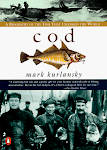
Cod, A biography of the fish that changed the world. By, Mark Kurlansky
Books of '11
- • Four Fish. By, Paul Greenberg
- • Environmental Law. By, Jamie Benidicson
- • Long Term Value Strategy for the Canadian Lobster Industry. By, Gardner Pinfold Market Research Associates
Books of '10
- • Fisheries Economics an introduction. By, Stephen Cunningham, Michael R. Dunn, and David Whitmarsh
- • Tar Sands. Dirty Oil and the Future of a Continent. By, Andrew Nikiforuk
- • Guns, Germs, and Steel. The Fates of Human Societies. By, Jared Diamond.
- • The End of Food. By, Paul Roberts
Books of '09
- • Silent Spring. By, Rachel Carson
- • Sea Sick, the Global Ocean in Crisis. By, Alanna Mitchell
- • The world without us. By, Alan Weisman
- • Bottomfeeder. How to eat ethically in a world of vanashing seafood. By, Taras Grescoe
- • Life in 2030: Exploring a Sustainable Future for Canada. By, John B. Robinson
- • The Whale Warriors. The battle at the bottom of the world to save the planet's largest mammals. By, Peter Heller
- • In a perfect ocean. The state of fisheries and ecosystems in the north atlantic ocean. By, Daniel Pauly and Jay Maclean
- • The end of the line. How overfishing is changing the world and what we eat. By, Charles Clover
Favorite Posts
Labels
- climate change (5)
- coast (1)
- Dear Korea... (2)
- energy (2)
- finning (2)
- fish (10)
- fisheries (9)
- garbage island (2)
- green building (1)
- Guest post (2)
- hypoxia (1)
- Interesting people (5)
- longlines (1)
- movies (1)
- ocean (19)
- organic (1)
- paper (3)
- plastic (4)
- recycling (6)
- seafood (6)
- shark (2)
- water (4)
- whales (1)
Blog Roll
Followers
Visitors
This work is licensed under a Creative Commons Attribution-Noncommercial-No Derivative Works 3.0 Unported License.


Post a Comment